
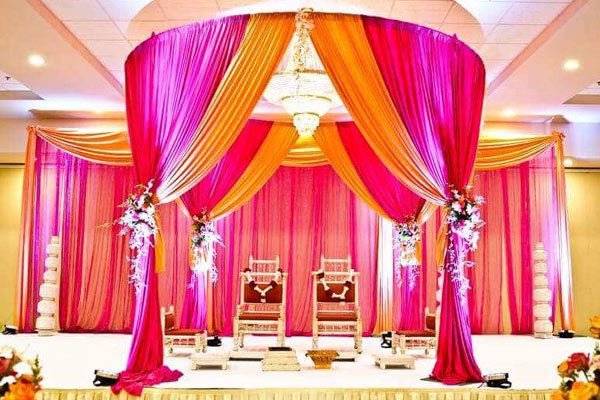
The mandap is the most sacred space of a Bengali wedding — the place where rituals are performed, vows are exchanged, and the ceremony takes place. Decorating it correctly requires understanding both its cultural significance and its practical requirements as a ceremony space.
This guide explains how a mandap for a Bengali wedding in Kolkata is traditionally decorated — the key elements, the flowers, and how modern designs are evolving while staying rooted in tradition.
Understanding the Bengali Mandap Structure
A traditional Bengali mandap has four pillars — typically banana tree trunks (kola gach) — and a canopy overhead. The structure marks out a sacred space for the fire ritual (havan), the exchange of garlands (mala badal), the shubho drishti, and the saptapadi. Every element of the decoration works around these ritual requirements rather than overriding them.
The mandap must be stable and structurally sound — it needs to remain standing through extended ceremony periods, sometimes several hours, with multiple people moving around and within it. When you are planning your mandap, prioritise stability alongside aesthetics.
The Four Pillars — Traditional Banana Trunk Decoration
Traditional Bengali mandap pillars use whole banana tree trunks — a practice that connects the ceremony to Bengal’s agricultural and spiritual heritage. The trunks are decorated with marigold garland wraps, rajnigandha strings, and mango leaf arrangements that run along the length of each pillar.
Each pillar base is typically surrounded by a small arrangement of fresh flowers — lotus where available, marigolds and rajnigandha otherwise — that reinforces the sacred character of the ceremony space.
The Canopy — Traditional and Modern Approaches
The canopy overhead is one of the most visually striking elements of the mandap. Traditional Bengali mandap canopies use mango leaves woven into a flat canopy structure, sometimes combined with white cloth and flower garlands.
Modern mandap canopies in Kolkata have evolved significantly — hanging flower installations, rose petal canopies, and mixed flower and fabric ceiling designs are all popular. These contemporary approaches create beautiful overhead decoration while maintaining the structural function of the canopy.
The Ceremony Floor
The floor space within the mandap is where the fire ritual takes place. This area must remain accessible and uncluttered — the decoration works around the perimeter of the ceremony space rather than within it. Fresh petals scattered across the floor, small floral arrangements at the base of each pillar, and an alpana design around the perimeter of the mandap are the typical floor decoration elements.
Flowers That Work Best for Mandap Decoration
The most appropriate flowers for Bengali mandap decoration, in traditional order of significance, are: lotus for sacred offerings, rajnigandha for garlands and arrangements, marigolds for pillar wraps and colour, hibiscus for ritual offerings, and jasmine (bela) for fragrance throughout the ceremony space.
Modern mandaps add roses, orchids, and seasonal blooms to these traditional flowers — creating setups that are culturally rooted but visually contemporary.
How Long Does Mandap Setup Take?
A complete mandap typically takes 4–8 hours to build and decorate, depending on complexity. Simple traditional mandaps can be completed in 4 hours. Elaborate modern mandaps with floral arch canopies and detailed pillar decoration require 6–8 hours or more.
Setup should always begin the evening before or very early on the morning of the wedding — never on the day itself without significant lead time. The mandap needs to be complete and checked before the ceremony begins, not rushed in the final hour before guests arrive.
Traditional vs Modern Mandap — Which to Choose?
The choice between a traditional and modern mandap depends on your family’s preferences, the rituals you are performing, and the overall aesthetic of your wedding decoration.
A traditional mandap with banana pillars, mango leaf canopy, and marigold decoration is culturally authentic and deeply meaningful — particularly if your family values the connection to Bengali wedding tradition. It photographs beautifully in natural and warm light.
A modern floral arch mandap with roses and orchids is visually striking and creates dramatic wedding photographs. It suits couples who want a contemporary aesthetic while maintaining the sacred function of the ceremony space.
Many families choose a hybrid — banana pillars wrapped with roses instead of marigolds, a flower canopy overhead instead of a traditional mango leaf structure. This approach combines cultural authenticity with contemporary visual appeal.
For professional mandap decoration in Kolkata for your Bengali wedding, our team designs and builds both traditional and modern mandaps across all major areas of the city. Learn more about our complete wedding decoration service in Kolkata or contact us for a free consultation.
