Bengali weddings in Kolkata have a deeply rooted floral tradition — specific flowers carry cultural and religious significance that goes far beyond their visual appeal. Understanding which flowers are used in Bengali wedding decoration helps you make better choices when planning your own celebration and ensures the decoration honours the traditions of the occasion.
This guide covers the key flowers used across different Bengali wedding ceremonies — from the wedding itself to the haldi, mehndi, and reception.
Rajnigandha — The Signature Bengali Wedding Flower
Rajnigandha, or tuberose, is arguably the most distinctively Bengali of all wedding flowers. Its long white stems, delicate fragrance, and cultural associations make it a staple of Bengali wedding decoration in Kolkata — used in garlands, stage arrangements, mandap decoration, and as a direct offering during rituals.
The fragrance of rajnigandha is so deeply associated with Bengali weddings that many people describe it as the smell of the occasion itself. No other flower quite captures the atmosphere of a traditional Bengali wedding in the same way.
Marigold — Auspiciousness and Colour
Marigolds are used throughout Bengali wedding ceremonies — particularly in the haldi and mehndi functions and for entrance torans. Their vibrant yellow and orange tones bring warmth and celebratory energy to any decoration, and their cultural significance as an auspicious flower makes them appropriate for virtually every ritual context.
In haldi ceremony decoration, marigolds are the dominant flower — used in garland backdrops, urli arrangements, and scattered across the ceremony floor.
Lotus — Sacred and Central
The lotus holds the highest religious significance of any flower in Bengali wedding decoration. It is Ma Lakshmi’s flower and is used as a direct offering during the wedding puja, placed at the feet of the deity, and incorporated into the mandap decoration wherever possible.
Fresh lotus availability varies seasonally in Kolkata — peak availability is during the winter months when most Bengali weddings take place, which is a fortunate alignment of nature and tradition.
Hibiscus — The Joba Flower
Red hibiscus, known as joba in Bengali, is a flower of particular religious significance for Shakti worship. It is used as an offering during the wedding puja and appears in the puja arrangements within the mandap. While not used decoratively in the same way as roses or marigolds, its presence in the ceremony space is traditional and meaningful.
Roses — Modern Elegance
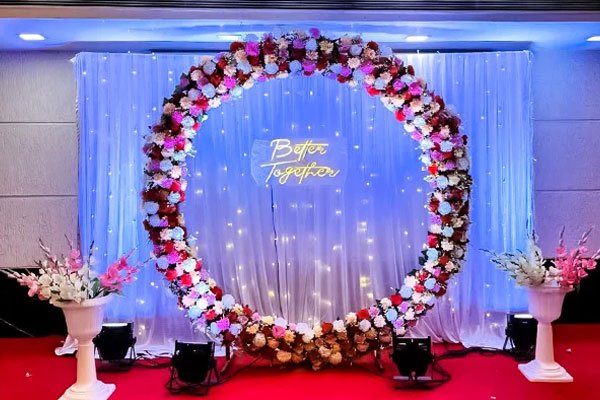
Roses have become increasingly central to Bengali wedding decoration over the past decade — used in stage backdrops, mandap arches, table centrepieces, and couple seating arrangements. Red roses carry romantic symbolism while white and pink roses are used for more contemporary, elegant decoration styles.
In our wedding decoration service in Kolkata, roses are one of the most frequently requested flowers — typically combined with rajnigandha and marigolds to create setups that blend the contemporary with the traditional.
Mango Leaves — Tradition at Every Entrance
While not a flower, mango leaves (aam pata) are inseparable from Bengali wedding decoration. Mango leaf torans are hung at entrances, woven into mandap structures, and used throughout the ceremony space as a mark of auspiciousness. They appear in virtually every Bengali wedding in Kolkata regardless of scale or budget.
Banana Tree (Kola Gach) — The Traditional Mandap Pillar
Banana tree trunks are used as the pillars of the traditional Bengali mandap — a practice rooted in both agricultural and religious tradition. The banana tree is considered sacred in Hinduism, and its use in the mandap structure connects the ceremony to Bengali rural and cultural heritage.
Jasmine — Fragrance and Purity
Bela, the small white jasmine flower, is used throughout Bengali wedding ceremonies — in garlands, as offerings, and woven through the bride’s hair. Its delicate fragrance and association with purity make it a natural part of the wedding ceremony environment.
Seasonal Availability in Kolkata
Most traditional Bengali wedding flowers are most readily available during the October to February wedding season. Orchids and imported flowers are available year-round but at a premium. If your wedding falls outside the main season, discuss flower availability and alternatives with your decorator in advance.
For a complete Bengali wedding with traditional flower decoration, contact us for a free consultation. We work with all traditional Bengali wedding flowers and design setups that honour the cultural significance of the occasion.
