Flowers are at the heart of Durga Puja in Kolkata — not merely as decoration but as sacred offerings, ritual elements, and expressions of devotion. The flowers used during the pujo are not chosen arbitrarily. Each one carries specific religious significance, cultural tradition, and a place in the rituals that span from Mahalaya to Bijoya Dashami.
This guide explains which flowers are used in Durga Puja in Kolkata, what each one means, and how they are incorporated into both community pandals and home puja decoration.
Aparajita — The Flower of Vijaya
The aparajita flower — a small blue-violet bloom — holds a uniquely important place in Durga Puja tradition. On the day of Mahalaya, aparajita flowers are collected and offered as part of the invocation of the goddess. The name aparajita means “one who cannot be defeated” — making it spiritually significant for a festival that celebrates Durga’s victory over Mahishasura.
Aparajita flowers are gathered in the early morning of Mahalaya — a tradition observed by many Bengali families across Kolkata as the first act of the puja season.
Lotus (Shatapadma) — The Sacred Offering
The lotus is the primary flower of Durga Puja — the most sacred offering and the most important element of the puja decoration. One hundred and eight lotuses are traditionally offered to the goddess during the sandhi puja — the ritually most significant moment of the entire festival, occurring at the junction between Ashtami and Navami.
The lotus is also used to decorate the space around the idol and appears throughout the puja arrangement as both an offering and a symbol of purity and divine presence. In Kolkata, the availability of fresh lotus during October and November is essential to the proper conduct of Durga Puja — and the trade in fresh lotus flowers during the puja season is itself a significant part of the city’s festival economy.
Marigold (Genda) — The Festival Flower of Bengal
No flower is more visually associated with Durga Puja in Kolkata than the marigold. Marigold garlands frame every pandal entrance, drape around every idol, and fill the air with a warm, distinctive fragrance that is inseparable from the festival atmosphere.
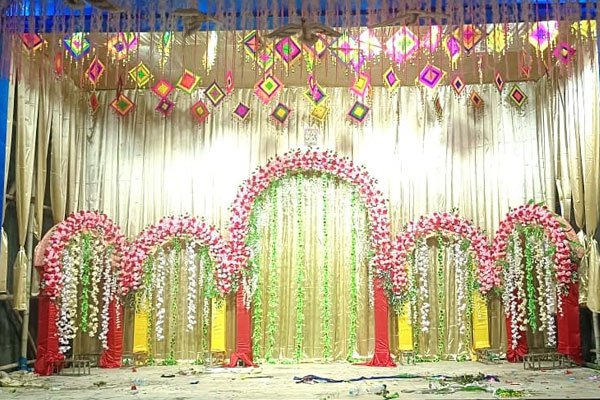
Marigolds are abundant, auspicious, and vibrant — their yellow and orange tones bring an energy to the puja space that no other flower matches at the same scale and price. For community pandal decoration in Kolkata, marigolds typically form the backbone of the flower decoration — used in the thousands for garland backdrops and entrance decoration.
Hibiscus (Joba) — Sacred to Shakti
Red hibiscus is the flower most directly associated with Shakti worship in Bengal. It is considered Ma Kali’s flower and is also sacred to Durga. A single joba flower offered to the goddess during the puja is considered a highly significant act of devotion.
In puja arrangements, red hibiscus is used as both a direct offering and a decorative element in the flower arrangement around the idol. Its deep red colour creates a vivid contrast against the white and yellow flowers that typically surround it.
Tuberose (Rajnigandha) — Fragrance and Devotion
Rajnigandha garlands are offered to Ma Durga throughout the festival — their long white blossoms and distinctive fragrance making them a staple of both the offerings and the puja space decoration. The scent of rajnigandha during the puja season is one of the most powerful sensory associations of Durga Puja for Kolkatans.
Jasmine (Bela and Jui)
White jasmine — both bela and the smaller jui variety — is used throughout Durga Puja decoration for its fragrance and purity. Jasmine garlands are offered to the goddess and woven through flower arrangements. Women attending the puja traditionally wear jasmine in their hair, connecting personal adornment with devotional practice.
Palash — The Flame of the Forest
The palash flower — bright orange-red, dramatic, and distinctive — has a specific role in certain Durga Puja rituals and appears in traditional puja arrangements. Its vivid colour and association with Bengal’s natural landscape make it a culturally meaningful element of the flower decoration.
How These Flowers Come Together in Puja Decoration
The best puja decoration in Kolkata understands the hierarchy and significance of these flowers — using lotus as the primary offering and focal point, marigolds for scale and colour, rajnigandha and jasmine for fragrance, and hibiscus as the sacred accent. The result is a puja space that is not just visually beautiful but ritually correct and spiritually appropriate.
If you are planning home puja decoration or community pandal decoration for Durga Puja or any other religious function in Kolkata, contact us for a free quote. We source all traditional puja flowers fresh and design arrangements that honour the sacred character of the occasion.
