
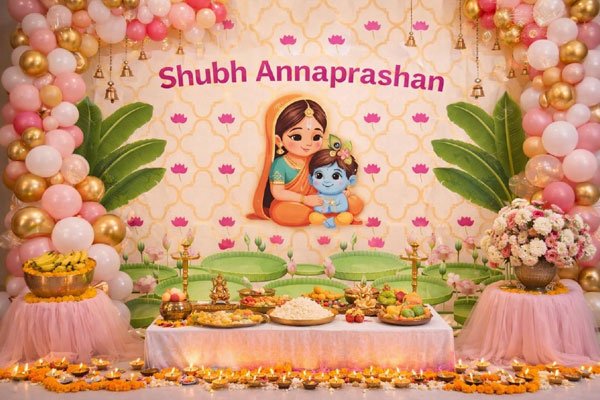
Annaprashan — known in Bengali as mukhe bhaat — is one of the most important and beloved ceremonies in Bengali family culture. It marks a baby’s first consumption of solid food — specifically rice — and is celebrated as a milestone that carries both practical significance and deep cultural meaning. Understanding the traditions, rituals, and the role of decoration helps families approach this ceremony with both proper preparation and genuine appreciation for what it represents.
What is Annaprashan?
The word annaprashan comes from the Sanskrit — anna meaning food and prashan meaning to feed. It is the ceremony of the first feeding, traditionally performed when a baby is between five and seven months old. For Bengali families, the ceremony is called mukhe bhaat — literally “rice in the mouth” — which reflects its specific focus on the introduction of rice, the staple food of Bengal, as the baby’s first solid food.
Annaprashan is one of the sixteen samskaras — the sacred rites of passage in Hindu tradition that mark significant transitions in human life. It is a joyful occasion that gathers the extended family and marks a visible milestone in the child’s development.
When is Annaprashan Performed?
For Bengali families, annaprashan is traditionally performed in an even month for girls — the sixth or eighth month — and an odd month for boys — the fifth or seventh month. The specific date is determined in consultation with a pandit who identifies an auspicious muhurtat based on the child’s birth date and the Hindu calendar.
The ceremony is typically performed during daylight hours and on a day that is free from inauspicious periods in the panchang.
The Key Ritual of Annaprashan
The central ritual is the feeding itself — a senior family member, typically the maternal uncle (mama) in Bengali tradition, feeds the baby the first spoonful of rice. The rice is traditionally mixed with payesh (sweet rice pudding) and sometimes other auspicious foods including honey and ghee.
Before the feeding, a puja is performed to seek blessings for the child’s health, nourishment, and long life. The baby is dressed in new clothes — typically a dhoti or saree in miniature for the photograph — and placed in a specially decorated seat for the ceremony.
The Naamkaran Connection
In many Bengali families, the annaprashan ceremony also serves as the occasion for the official public announcement of the child’s name — particularly if the naamkaran (naming ceremony) was performed as a smaller, more private family event earlier. This dual function makes the annaprashan even more celebratory and significant.
The Chhelekhela Ritual
One of the most beloved and photographed moments of a Bengali annaprashan is the chhelekhela — the game of selection. Objects with symbolic meanings are placed before the baby and the child is allowed to reach for whichever appeals to them. The objects traditionally include: soil (representing land and agriculture), gold or silver (representing wealth), a pen or book (representing knowledge and learning), food (representing a life of abundance), and sometimes a tool or instrument.
Whichever object the child reaches for first is believed to indicate their future inclinations — a playful, affectionate way of imagining the child’s path. This moment is always photographed extensively and is often the most memorable image of the entire ceremony.
How the Decoration Supports the Ceremony
Annaprashan decoration creates the beautiful environment in which these rituals take place. The decoration for an annaprashan in Kolkata uses soft, warm flowers in light colours — pink, white, yellow — that complement the gentle character of the occasion and create a beautiful backdrop for the family photographs that capture the day.
The most important decorative element is the baby’s seat — a beautifully decorated chair or specially arranged seating area that serves as the focal point of the ceremony space and the backdrop for the feeding ritual photographs. Every family photograph from the ceremony — the feeding, the chhelekhela, the family gathering — is taken with this decorated seat as the backdrop.
The entrance decoration, puja area flowers, and the overall colour theme of the decoration create an atmosphere that feels celebratory and warm — appropriate for a ceremony that is, at its core, a joyful family gathering around new life.
Planning Your Annaprashan in Kolkata
When planning an annaprashan in Kolkata, confirm the muhurtat with your pandit first, then plan the venue — home functions are most common but community hall annaprashashan ceremonies are also popular for larger families. Book your decoration at least one week in advance, sharing the ceremony time and venue details.
For professional annaprashan decoration in Kolkata, contact us for a free quote. We also provide griha pravesh decoration and all home ceremony decoration across Kolkata.
